Curriculum & Pedagogy
What Outstanding Teachers Know & Do to Facilitate Learning
Resources for professional educators to reflect on teaching and learning, develop curriculum, and make informed instructional decisions.
Overview
Explore the definitions and roadmap for independent, self-paced professional learning.
Educational Information for Teaching & Learning
Last edited - November 24, 2026
Overview - of page contents
Pedagogy. The art & science of teaching - how knowledge & skills are learned and taught in an educational setting (instruction).
Curriculum. All the planned and unplanned experiences students have in school and out.
Content on this page includes information necessary for professional educators to develop mastery of curriculum and pedagogy.
Curriculum & pedagogy
- Conceptual framework
- Purposes of Education, philosophy, principled procedures
- Knowledge drives our decision-making - We use theories, attitudes, research & wisdom of practice guides our decision-making
- Instructional assessment
Pedagogy - Learning & Teaching (instruction)
- General instructional theories, methods, or models
- Unpacking content - We know how to select & unpack content appropriate for diverse learners
- Instructional planning - We know how to plan instruction that facilitates learning
- Selecting instructional procedures - We know how to select & use appropriate teaching methods & procedures for our learners
- Assessment & evaluation - We know how to assess & evaluate our learners
- Instructional assessment - We know to assess our instruction
These areas are organized as a roadmap (agenda, plan, syllabus outline) to guide independent, self-paced learning. And information to support reflection and inquiry for professional educational development is included or linked.
As educators, our knowledge in these areas ranges from novice to expert and can be documented in a conceptual framework to communicate what knowledge, understanding, strategies, and dispositions we know and use to make decisions to facilitate learning.
Professional Development
Develop a conceptual framework through inquiry, reflection, philosophy, principled procedures, and assessment of instruction.
Conceptual framework
Educators develop professionally by continuously assessing and reflecting on their practices to identify areas for inquiry. Areas which they research with guidance from their conceptual framework as they make decisions to benefit themselves and their students.
Continual inquiry and reflection enhance professional development by striving to attain expertise and dispositions (our knowledge base) needed to make sound decisions to facilitate high levels of learning among our students.
The more we know about our knowledge base and the influences we use or do not use to make decisions, the better our decisions will be. Therefore, it is beneficial to identify and describe our knowledge base with a conceptual framework.
Elements of a Conceptual Framework
A conceptual framework represents the essence of a knowledge base with information about elements such as:
- Teachers - what we know and do to teach,
- Students - what they know and do,
- Pedagogy - interactions for teaching and learning,
- Mediators - information used to make and communicate decisions,
- Processes - for continual reflection, decision-making, and assessment.
Making a conceptual framework
- Agenda to create a professional educator conceptual framework & development cycle
- Conceptual framework visual
- Elements that inform & develop a conceptual framework
- Principled procedures
- Subject discipline knowledge content descriptions
- Professional educators and their development
- Professional educator development cycle
- Professional science educator development process: knowledge, skills, dispositions, & process of becoming an outstanding professional science educator
- Professional mathematics educator development process: knowledge, skills, dispositions, & process of becoming an outstanding professional math educator
Purpose of education, philosophy, & principled procedures
An important factor in decision-making is knowing if our philosophies, theories, beliefs, attitudes, and principled procedures, that influence and guide our decision-making, are in harmony to achieve our expected goals and outcomes.
Thus, it is important for individuals and groups responsible for curricular decisions to examine their conceptual framework and other curriculum documents to see if what we use to influence our decisions are consistent with the curriculum we develop and implement so that our actions will achieve our expected results.
An agenda to assist in this process includes analysis of the:
- Purposes of education: This article as a comprehensive resource for educational institutions and educators to provide guidance on determining purposes of education for setting educational goals and outcomes. It includes focus questions and a meta analysis of purposes for education and schooling.
- We all have educational philosophies or theories. It is important to know them - Donkey Fable & discussion for this important point.
- Essays on education and the children served. Hopefully to motivate change
- Children as our gift for a future - reprint of "If you could listen to a child's soul..." by Andrew Vachss
- A Message to Inspire Change in Education: by considering explorative learning
- Quality schools - Explores what is a quality school and how to select them
- Seven focus questions to consider to make a powerful educational theory
- Goal setting activity with a focus on teaching to coordinate teaching goals with an educational philosophy
- Characteristics of what is human? Humans & animals compared
- My response to the seven focus questions
- An educational philosophy in narrative form
- Assorted theorists - their theories, their main ideas and principal teachings for discipline, management, & curriculum
- Research information & wisdom of practice to inform decision making
Principled procedures - examples to guide our decision-making to achieve our educational goals.
- Sustainable communities
- Mathematics,
- Literature,
- Science, - suggestions for creating
- Ethnic studies
Instructional assessment - agenda
When assessing instruction consider there are three basic ways to improve learning:
- Increase the level of intended learnings,
- Change the role of the learners, and
- Increase the knowledge and skill of the teacher.
Assessment framework for mentoring
A simple framework to guide reflection and collegial mentoring of instruction.
- Recognize something that went well, identify it, and describe it with details and a rational for your appreciation of it as a successful strategy or interaction.
- Get the other person to talk about it and the lesson. May need to prompt, what else did you think …
- Decide when to introduce a situation you would like them to reflect on for consideration of changing or improving. Be prepared to explain what strategy or interaction could be used in its place and how it will benefit the teacher and learners.
- Agree on how to implement a change, offer support, and suggest a future time to reflect further.
Teacher Reflection - suggestions for subject instructional reflection & assessment
- Mathematics instruction - probem solving and disposition
- Science instruction - inclusion of different science dimensions
- Literature instruction - suggestions for reflecting & assessing a Read-Aloud - with speciic example & demonstration for The Last Basselope. by Berkeley Breathed
- Writing instruction
Student survey of a teacher for reflection & assessment - 11 item survey.
Ten instructional indicators and lesson plan checklist
Teaching assessment - directions and forms for reflections & evaluations of three kinds of lessons: learning cycle, cooperative learning, & direct instruction forms - Agenda for microteaching format
Sample questioning dialogue from Smile to Go by Jerry Spinelli to consider its value.
Research & Wisdom of Practice
Use research, professional reading, and the wisdom of practice to inform educational decisions.
Textual resources
- Standards
- Knowledge bases (science) (math) (multiMedia) (health & human anatomy)
- Books for educators - annotated list of educational books: education, psychology, development, sociology, management, educational law, & other pedagogy related books
- Mathematics - annotated list of math content books
- Literacy, literature, media, & children's literature - - annotated list of media & literacy related books
- Science education - annotated list of science content books
Online resources for professional organizations
Resources on This Site (Alphabetical)
- Augmented Reality ...
- How to Create an Augmented Reality Experience for Your Business includes education
- Behavior - holistic model of behavior
- Bilingual Education - information & research
- Bruner's six instruction & three learning modes - Relates instruction to 1. concrete, 2. iconic or semi-concrete, & 3. symbolic or formal operational
- Censorship & dealing with controversy
- Classroom organizations map - eight attributes when organizing a classroom or groups
- Classroom as a social environment - creation of classroom environments & its curricular aspects
- Conversational interactions for a five step problem solving model or heuristic map - to assist behavior change
- Critical thinking - discusses thinking with suggestions on how to think better and become critical thinkers. Includes a discussion of critical thinking and related topics, a critical thinking curriculum developed by Robert H. Ennis, with dispositions, outcomes, 15 abilities for critical thinking, & assessment. Also a process for critical thinking, quality standards for critical and scholarly thinking, & references to develop civics
- Thought Process for critical thinking, and Metacognition - thinking about thinking to use as guide, poster, or handout.
- Quality characteristics for scholarly or critical thinking to use as guide, poster, or handout
- Culture model
- Current issues & trends keep updated on recent issues & trends
- Erikson's psychosocial theory - review sheet
- What is hands on? - Activity to discuss & define hands on learning that uses learning theory to experiences to the learner's developmental abilities
- Illusions and other brain ideas that stop or hinder learning
- Imagination
- Influences on people or circles of influence map
- Influence systems map
- Inquiry theory & inquiry as an instructional method or strategy
- Instructional theory
- Instructional models & strategies (20) plus procedures & syntax
- Instructional strategies that work (Robert Marzano, Debra Pickering, and Jane Pollock).
- Interview - sample questions & ideas
- Kohlberg theory of moral development - review sheet
- Research based programs for improvement in: Learning difficulties, Listening & auditory processing, Memory, Attention and ADD, Reading comprehension, Sound discrimination, Dyslexia, and Language skills
- Learning theory
- Learning theory variables
- Literature
- Management of individuals, groups, & classrooms research to inform curriculum & pedagogy
- Media literacy - introductory information for multimedia literacy, the importance of moving beyond literacy, which focuses only on reading and writing, and information for planning and facilitating it. Topics include: an introduction, multimedia goals, outcomes, inquiry process, philosophies, implementation suggestions analyze media for young and intermediate learners, questions for deep inquiry, fact and opinion, fact and fiction, misinformation, spreading misinformation, propaganda, its strategies and techniques to influence actions, questions to evaluate a viral video, core principles of literacy, and strategies for action.
- Maslow's hierarchy of needs
- Middle school characteristics, theory, development, teaching, and instruction resources
- Academic organizational possibilities - illustration of organizational possibilities to consider when planning, based on eight variables
- Moral & ethical - reviews ideas related to morality and ethics to provide a background to understand the moral choices and decisions we make and how they are made. Topics include: a process of moral reasoning, its development relative to human intuition, judgment, & reasoning using, an analogy of the elephant & rider. Identifies moral actions with ethical behavior, character, values, & conscience. Includes reasons to help, punish, forgive, or use restorative justice along with rules to live by. Golden, silver, platinum, brazen, iron, bullies, blood, tit-for-tat and the prisoner's dilemma. Also studies, findings, & suggestions along with teaching & learning guidelines, characteristics of learning environments for moral & ethical development, dilemmas to initiate discussion on morality, and resources.
- Motivational theory & theory of self-efficacy
- Physical activity & learning - .PDF on research to support the importance of physical activity and how to justify its inclusion for academic improvement.
- Portfolio: annotated outline for creating subject centered portfolios
- Projects - Ten step planning process to guide the development of an independent project --->>>with a completed sample
- Propaganda -
- Multiple intelligences theory & Hollands codes - reviews nine categories, explanations, examples, and discussion on on how activities fit or don't fit the different intelligences
- Reinforcement - types of reinforcement defined, explained, examples forhow to use.
- Social theory - notes on how social learning supports content & is necessary for social learning - cooperative & group skill
- Success attributes that contribute to self-efficacy & flow chart
- Technology
- Technology and AI in education
- Directions and tutorials for IPhotos, IMovie, ITunes, and Windows media outdated
- Visual spatial abilities, skills, instruction, research
- Vouchers
Video
- Videos
- Hole in the Wall in India (6:04) - Children can educate themselves and future of the human brain with technology
- Hole in the Wall in India - Children can educate themselves
Websites
- WomenEd - a global grassroots movement to connect aspiring & existing women leaders in education
Curriculum Development
Explore curriculum purposes, organization, integration, and examples of curricular change.
Curriculum. All the planned and unplanned experiences students have in school and out of school.
Each learner’s education includes all of their experiences. When planning and implementing curriculum, educators often focus on specific ideas and contexts. Curriculum documents communicate these decisions to educators, learners, administrators, and other interested members of the public.
Documents include, but are not limited to: theories, mission statements, philosophies, principled procedures, action plans, standards, maps, webs, models, frameworks, instructional procedures, syntax, lesson plans, units, year plans, multigrade curriculum, and assessment plans.
Organized with different scopes, durations, grade levels, and information to learn.
Middle & High School Starting time: The American Academy of Pediatrics & Centers for Disease Control have supported starting classes at 8:30 a.m. or later. See the American Academy of Pediatrics policy statement (2014) and a 2022 meta-analysis associating later start times with longer sleep, improved developmental outcomes, and less negative mood.
First, a big picture of curriculum, then different areas of focus.
Big picture resources for elements of curriculum & development
- Introduction to Curriculum - discussion of curriculum, a survey to review different ideas of curriculum, an analysis of different meanings & definitions of curriculum, summarized with five categories of definitions. Introduces a curriculum development model to analyzing curricular change. Includes examples, suggestions, guidelines, & a model to analyze possible change & examples on how to initiate change along with documents & rationals to communicate & support decisions. Also a sample mission statement
- Pros & Cons for a National Curriculum & National or State Standards
- Organization of information:
Big ideas focus- Curriculum focused on integration of big life ideas - Real life integration
- Resources to integrate curriculum with music - Teach Rock: Bringing core subjects to life
- Subjects integration - the curriculum and lesson sequences are organized around a topic that uses related actvities from the subjects: reading, writing, mathematics, science, art, music, health, history, geography, physical education that focuses on the topic or concept from the point of view of the different subjects. This framework includes a plan for the study of sound integrated into subjects: science, music, health, art, creative movement, literature, language arts, story telling, history and geography of music around the world, and so on.
- Disciplines dimensions integration - the curriculum and lessons sequences are organized around a traditional subject topic content and include the dimensions of a subject or discipline. This sample sound unit and planning integrates the different dimensions of science. Most of the science plans on thehob include subject integration.
Focused Curriculum Resources
- Sample curriculum
- Middle level health curriculum
- Historical elementary (K-8) science curriculum by Lola Way - 1947
- Man a Course of Study (MACOS) - an American humanities teaching program, initially designed for middle school and upper elementary grades in the 1970s.
Learning & Human Development
Explore how learners develop and how knowledge of development can guide instruction.
- Learning theory - how humans learn from infant to adult. A constructivist model with a Piagetian base. Includes learning procedure, flow chart, variables that effect learning, what changes & doesn't change, explanations for children's thinking as naive understandings or misconceptions, physical activities that develop intelligence, logic and other thinking skills. Explains development over time:
- Learning process - How learning happens - learning process, cycles of learning, accommodation, assimilation, discrepant event, disequilibrate, equilibration, variables for learning, explanations for learner's thinking as naive understandings or misconceptions.
- Birth - age 3 (sensorimotor) -
- Age 3 to age 7, preschool - grade 2, (pre-operational)
- Age 8 - 11, third - fifth grade (concrete operational)
- Age 11 - adult (formal operational)
- Human development - tasks for different kinds of intellectual thinking across ages to illustrate development. Includes directions, materials, responses, & explanations.
- Caring, empathy, & belonging - introduction with definitions, research from Harry Harlow to today, & examples on how to develop caring, empathy, & belonging.
- Moral & ethical - theory, development, teaching, & instruction notes
- Sequence to explore a constructivist learning theory
- Play & learning - review a learning theory to see how they are intertwined.
- A New Path to Education Reform: Playful Learning Promotes 21st Century Skills in Schools & Beyond - Research on the importance of play. by Brookings research
- Carnegie Report on Preparing Adolescents - Middle level learners
- Development of Scientific Ideas and Reasoning - Using disequilibration
See also: Legacy Piaget resources in Educational Issues & Trends.
Learning Theory Applied to Instructional Theory
Use demonstrations, puzzles, discussion, and practical questions to connect learning theory with instructional decisions.
Demonstration Activities to Explore Constructivist Learning Theory: Piagetian based
A Pretest to challenge and focus on how children and adolescents develop based on a constructivist learning theory.
The following activities provide experiences to demonstrate how people learn and how their learning can be explained by a learning theory in conjunction with instructional methodologies and procedures.
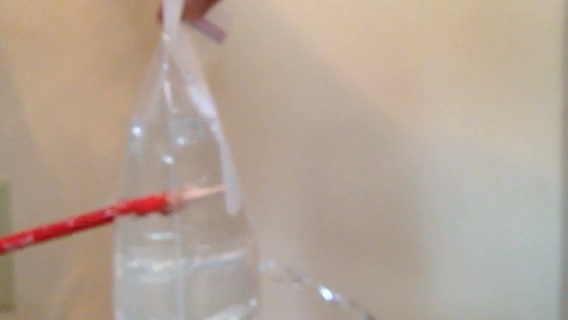
- Start with a demonstration, like in the video above, using a pencil to pierce a plastic sandwich bag mostly filled with water. Information in science lesson format. Students will want to first discuss the physics of what happened. Do so and then turn the discussion to how it relates to learning and a learning learning theory.
- Can follow-up with another piercing this time of a balloon semi-filled with air with a bamboo skewer or sharpened knitting needle. Again discuss how it relates to learning and a learning theory.
- Follow the learning theory discussion with a discussion of how to provide learning experiences for learners that will take advantage of the theory. To be effective, educational methodology generally and instructional procedures more specifically to achieve this. Start with a review of a general instructional method and then learning cycle methodology.
- After reviewing these instructional methods decide on a personal model.
- Using your personal model, explore different ways to insert different syntax and strategies as might be necessary to plan procedures to meet the different needs of diverse learners.
- Additionally it illustrates the itertive self-correcting nature of science where mismatches between a model and reality are not failures, but opportunities for more exploration.
A solid understanding of a constructivist learning theory and how to use it to make decisions based on the needs of your learners is critical for their development and depth of learning.
The learning cycle is applicable across age groups. Learners’ reasoning may become more logical as they mature, but not all learners develop at the same rate or reach formal operational thinking in every area.
Explore these activities and tasks to develop intellectual thinking for learners across all ages. Includes directions, materials, and variety of responses with explanations.
The Garduckals challenge and activity (5 minutes) will let you explore and discuss how a learning theory can explain the desire (motivation), search, and use of associations to find a solution as a person solves a problem or challenge.
The next set of activities presents puzzles and problems historically used to study the development of propositional logic, correlation, probability, and proportionality. Responses can be interpreted in terms of preoperational, concrete operational, and formal operational reasoning.
The activities are presented along with representative data to illustrate a comprehensive analysis of the thinking learners use to attempt to solve problems for these types of problems.
Summary sheet for the puzzles and development.
- Jo Short or Jo Tall puzzle / activity - representative sample solutions
- Water Machine puzzle sheet - representative sample solutions
- Transportation puzzle- representative sample solutions
- Frog problem / activity
- Meal worms experiment / activity - representative sample solutions
- Puzzle discussions - with Longitudinal Development Chart of Mental operations
- Rings around the rose logic game
- Post Puzzle review
A comprehensive review of studies on logic and learning can be found in A Love of Discovery, described in Pedagogy & Instructional Planning.
Questions to help understand a learning theory and how to use it to make teaching decisions
- What is the difference between how children learn, how children construct knowledge, and what a learning theory explains?
- How do assimilation, disequilibration, cognitive dissonance, equilibration, accommodation, ZPG (zone of proximal development), and developmentally appropriate fit in a learning theory?
- What variables affect learning?
- How do learning styles fit a learning theory?
- Describe your interpretation of the statement: All people learn differently.
- How should instructional theories or models fit with a learning theory?
Using developmental ideas to adapt activities for students
Miscellaneous Brain-Related Topics
Real-World Application
- Parent, "How do you facilitate your student's learning?"
- Principal, "Tell me how you believe children learn?"
- Principal, "If I walk into your classroom what will I see?"
- Principal, "Describe how teachers can use a theory on how children learn and incorporate it into their classroom instruction.
- Principal, "Tell me how you will teach so children can learn?
Pedagogy & Instructional Planning
Connect instructional theory with the selection, organization, and planning of learning experiences.
Pedagogy. The art & science of teaching - how knowledge & skills are learned and taught in an educational setting (instruction).
General instructional theories, methods, or models
Instructional theory is the heart of pedagogy. It is a general procedure for how educators create and coordinate the learning environment, atmosphere, methods, procedures, syntaxes, strategies, and assessment to facilitate the intended learnings according to the learners’ needs.
A general instructional method or theory is presented, followed by three traditional instructional methods or theories.
- General instructional theory, method, or model is flexible enough to guide the design, implementation, evaluation, and improvement of instruction, at all levels of education, for all subject matter, and for any length of instructional time
- Support for an instructional methodology based on a constructivist learning theory
- The big three instructional models or theories
- Inductive or indirect theories are learner centered and based on a constructivist learning theory. A very common example id the Learning cycle, for which there are several versions.
- Learning cycle instructional model - topics include:
- Planning ideas
- Positive, Neutral, & Negative teacher and learner actions in a Learning Cycle Sample parts of a lesson as instructional indicators of who does what & its effect on quality instruction & learning
- Comparison of three versions of a Learning Cycles & the Common Knowledge Construction Model: Related to learning theory, instructional purposes, and each other
- Learning cycle in different blocks of time
- Sample plans to discuss as hands on and constructivist
- Learning cycle Sample lesson video - traditional electric circuit investigation
- Learning cycle instructional model - topics include:
- Cooperative learning theory or model is designed to include both a social dimension & other content dimension. Any content can be supported with the inclusion of social skills, which can be introduced, practiced, or maintained.
- Directed instruction model or theory
- Inductive or indirect theories are learner centered and based on a constructivist learning theory. A very common example id the Learning cycle, for which there are several versions.
How to use general models in education, is the planning , which includes selecting topics, unpacking them, and choosing information, activities, materials, procedures, and other resources to meet the needs of learners.
Planning pedagogy (instruction for teaching & learning)
as designers of learner centered authentic learning experiences
Plan is a strategy for doing or achieving something. In education, planning is the process of creating procedures to achieve the purposes of education.
- Purposes, identified in the planning (mental & media), to communicate with ourselves, fellow educators, and other interested parties; what is to be achieved and procedures for how to facilitate it.
- Communicated purposes with goals, objectives, aims, outcomes, standards, & procedures usually in documents as beliefs, purposes, standards, mission statements, curriculum, & plans for teachers & schools.
- Communicate procedures that facilitate intended learnings with instructional methods, and instructional experiences and
- Positive learning environments.
Procedures as detailed anticipatory classroom management plans for every move from the first days of school to the last. They are like a pilot’s flight plan. Procedures govern everything done, therefore, the more procedures a person knows, the better prepared they will be for whatever happens. Procedures which can be in documents or in teacher's memories. They include
- General procedures for management steps and examples for interacting with individuals, groups, & classes can be documented in a Teacher action plan.
- Procedures for selected educational purposes, goals and outcomes for a specific content area, for students to learn to achieve the purposes of education.
- Learnings, which combine contextual areas, topics, subjects, dimensions of learning, literacy, skill, standards, outcomes, ... , for the purposes of education.
To summarize planning unpacks and organizes what is to be achieved and combines it with procedures to achieve it, based on:
- Purposes of education - use the educational goals, beliefs, philosophies, rationale, mission statements, action plans, principled procedures, ... for both holistically for overall education and for specific areas used to develop all educational contexts.
- Consideration of learners - consider the development, background, culture, interests, motivation, needs (Maslow), ... Specific learner or groups of students (lesson plan, IEP, remedial lesson, gifted lesson) or for a generic group of students (preschool, first grade, primary, middle level, chemistry, health, k-12 music, and k-16 curriculum, & standards for learning).
- Intended learnings - identify the content its relationships in contextual areas (time, relationships, symbolic, global, subjects, disciplines, content areas, ...) and how it is represented as perceptions, facts, observations, inferences, properties, concepts, relationships, generalizations, schemas, skills, ... Intended learning as specific or global; focused or integrated, contextual areas. Lesson plan, weekly plan, framework, unit, packet, yearly plan, K-12, K-16, curriculum, standards.
- Concepts, facts, and generalizations (big ideas) - suggestions & examples on how to write See unpacking topics ...
- Standards, standard documents, and organizations that developed and maintain them
- Classification theories and taxonomies for planning objectives, questions, tooth pick activity to explore levels of cognitive knowledge, and instructional procedures. Bloom, Krathwohl, and Harrow. Cognitive, affective, & psychomotor. Art Costa's Levels Of Questioning. Norman Webb's - Depth of Knowledge (DOK)
- Selecting instructional procedures - Instructional procesures are learning opportunities, activities, sequences, procedures, methods, strategies, ..based on personal experiences to facilitate learning (teaching) -
- Consider theories, methods and models as a foundation to plan detailed instructional procedures
- Procedures - to make decisions, based on the intended learnings, on how to sequence instructional experiences with in an instructional methodology. A sequence to decide on specific and detailed to general and diverse information, easy to difficult, familiar to outlier, or general to specific. Consider what examples will best define the big ideas for the topic, inclusion of examples, non examples, and boundary cases. Examples on how to plan for specific content or subject areas to include within integrated or specific subject planning.
Different syntax or procedures to adjust theories & methodology procedures can be.- Instructional procedures, syntax, & strategies to implement a teaching model: Inductive-Thinking, Concept Attainment, Picture-Word Inductive, Cooperative learning, Science: Inquiry, Learning cycle, Inquiry Training, Memory, Synectics - Creating Something New ,Advance Organizer, Group Investigation Model of Learning and Teaching, Role play - Role Play Reversal and sample role play steps Sample role play in classroom and behavior management scenario, Jurisprudential Inquiry, Non directive, Reciprocal teaching , Skills instruction, Simulation, Philosophy for Children & critical thinking
- Questioning strategies - overview and article with suggestions and examples
- Activities to practice questioning and wait-time | Raisins Activity | Cartesian diver |
- Brainstorming
- Brainstorming, creative thinking, divergent thinking, lateral thinking, & kicking ideas around suggestions- directions & suggestions
- Exploratory writing or rough draft directions & suggestions
- Brainstorming solutions for problems - brainstorm problems, then select a problem, & brainstorm solutions
- Notice and wonder worksheet - notice & wonder statements are great to use to draw attention to observational information to analyze and question with critical thinking for deeper understanding without a lot of judgmental or disapproval. Can be used with or without a worksheet.
- What do you know? Worksheet for Form, Function, Connection, & Reflection as a procedure for deeper understanding
- Problem solving, metacognition, and reflection outline with focus points
- Decision making and change
- Issue Analysis Heuristic - bank worksheet & sample issues analyzed for democratic education for all
- Position Analysis Heuristic - explanation and worksheet
- PQRST Single-sentence-pattern to present an argument - explanation and work sheet
- Reasoning & proof
- Activities
- Kinds of activities, questions, problems - list to consider for different learning experiences. Examples t0 sequence as learning procedures.
- List of real world ideas to adjust activities & learning outcomes - activities and topics related to the real world are more motivational and will have greater application for learners.
- Length of time (daily lesson plan, weekly plan, unit, year plan, or multiple years)
- Classroom environment and atmosphere - created with the interactions of all of these elements of planning. social aspects,
- Classroom organizational model - possibilities for classroom organizations based on eight variables
- Classroom as a social environment
- Environmental management considerations
- Management - self, individual, groups, & classrooms knowledge base
- Motivation
- Social theory - notes on how social learning supports content & is necessary for social learning - cooperative & group skill
- Team building, collaboration, & cooperation & activities with suggestions
- Directions - suggestions for writing and giving directions
- Assessment- method, times, outcomes, levels, ...
Planning outlines
The following outlines suggest how these common elements can be included in short and longer term plans.
Let's connect the kinds of documents typical for each of the areas so we can quickly and efficiently deal with large amounts of information and their relationships to planning and teaching.
To create instructional procedures and implement them, consider the following information and its organization ...
A Love of Discovery: Science Education-The Second Career of Robert Karplus. Edited by Robert Fuller 2002.

Robert Fuller compiled documents and commentary describing Robert Karplus’s positive influence on elementary science education in the late twentieth century. His work continues to inform elementary science education.
Robert Karplus was a physicist who was asked to teach a science lesson in an elementary classroom. Inspired by how difficult it was to teach children, he began to research how to teach elementary students. He discovered Piaget's constructivist learning theory and discovered it helped to frame how students learn, how they reasoned, how learning is comparable to doing science, and how these ideas could inform instruction. His background, as a physicist, helped him to research and understand how to apply new ideas through a process of curriculum development to implement continuous change. He demonstrated how a curriculum could be created and implemented in a manner which could be used that was developmentally appropriate, research based, facilitated science literacy along with a love of discovery, and develop reasoning and logic necessary to become critically thinking citizens. A very insightful, interesting, and enjoyable book that can inform all science educators.
Unpacking content
Unpacking is the process of selecting the information and skills necessary to know; to decide instructional experiences and procedures, to use with instructional methods to create learning environments to achieve the purposes of education.
It starts with referencing our understanding, other documents, standards, curriculum, textbooks, research articles, maps, and other resources to gather information and organize it according to the learners' needs to facilitate their learning.
Information, which can be displayed in maps, webs, diagrams, lists, tables, charts, matrices, frameworks, outlines, narratives, ... as contextual areas, subjects, topics, focus questions, facts, concepts, generalizations, schema, and their relationships necessary to understand them, select methods and procedures to learn them to achieve the purposes of education.
Unpacking examples:
Maps, webs, & charts to organize & focus learn
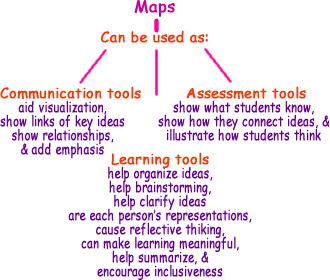
Webs and maps are nonlinear visual tools to organize information.
This map of maps illustrates uses and examples for organizing thoughts and ideas for understanding, organizing, learning, and instructional tools.
Some possible examples:
- Brainstorm & define
- Juice concept chart - complete & blank concept chart. Complete for juiice with characteristics, exemplars, non exemplars, & other characteristics related for juice.
- Rock cycle map - unpacked content necessary to explain the rock cycle
- Concept chart - to examine concepts features, none features, examples & related concepts - blank
- Frayer Model - explanation, three samples, uses definition, facts & characteristics, examples, non examples, words, & pictures. Use to find the level of concept mastery
- Describing objects & phenomina - use bubbles to relate properties & descriptions
- Colors - web to unpack colors as representative objects, & associated ideas
- Animal properties - map structure was created by including properties about animals on the map desired for the learners to explore & learn. Selected by unpacking the dsired outcomes.
- Survival - map with seven conditions for survival, with bubbles to add details
- Comparing & contrasting - double sided or double bubble
- Compare and contrast - web for nickel & dime, mostly completed
- Compare and contrast - web blank
- Double bubble maps - blank map, sample for reptile & bird, used to compare similarities & differences
- Categorize & classify -
- Plant kingdom tree like map
- Part to whole -
- Sequence - flow map, timelines
- Life cycle mushroom
- Flow chart motivation
- Conversation flow map to change
- Timelines
- Cause & effect - before & after
- Interactions - observation, interactions, change, before & after, chart ready to use
- Analogy & reasoning - bridge
Planning maps & diagrams to relate contextual areas
- Culture model
- Holistic model of behavior
- Influences on people or Circles of influence map
- Influence systems map
- Integrated planning framework for a theme integrated with school goals & outcomes
- Frameworks to plan for integrated schooling - includes blank matrices to relate school goals to content areas. Sample completed that relates focus questions to school goals & content areas for the theme of water - integrated curriculum
- Literacy as communication through multiMedia
- Literature & literacy model
- Literature responses model
- Math dimensions
- Science dimensions
Planning procedures & frameworks to organize & document information with instructional ideas
- Planning map framework with categories & explanations to consider when planning to teach big ideas, concepts or generalizations in map format . More information in general planning model.
- BLANK planning map with categories for - Focus area or topic, focus question, relationships & concepts, perceptual responses, observations, properties, transformations, tasks & activities, assessment levels, real world value, classroom atmosphere, & instructional assessment. More information in general planning model.
- Sound - includes focus question, concepts, perceptual responses, observations, facts, properties, transformations, activities, assessment levels, real world value.
- Classification as a process dimension with categories for - focus question, concepts, perceptual responses, observations, facts, properties, transformations, activities, assessment levels, real world value
- Geometry, area, mathematics - with categories for - focus question, concepts, perceptual responses, observations, facts, properties, transformations, activities, assessment levels, real world value
- Proof and reasoning - with categories for - focus question, concepts, perceptual responses, observations, facts, properties, transformations, activities, assessment levels, real world value
- Dystopian society - media, social science, literature - with categories for - focus question, concepts, perceptual responses, observations, facts, properties, transformations, activities, assessment levels, real world value
- Internal combustion four cycle engine - with categories for - focus question, concepts, perceptual responses, observations, facts, properties, transformations, activities, assessment levels, real world value
- Frameworks for planning learning experiences - includes instructional methods or models for a learning cycle, cooperative learning, directed instruction & the common knowledge construction model. These procedures are connected to elements for intended learnings, development, & assessment.
Planning that combines contextual areas across age levels
- Step by step example of how to construct concept maps for a topic across grades - Annotated step by step directions for planning instruction for magnetism from preK through eighth grade.
- Water cycle map - unpacked for the development of information from preschool to science literacy of the water cycle
- Frameworks for year plans & multi year plans
Instructional planning
While communication and presentation of learning activities follow a sequence, the order of information selection and organization for planning and implementation is flexible.
Educators begin creating procedural information once they have gathered enough information, either by inserting it into planning outlines or frameworks , or starting with a blank document.
Procedures as lesson plans
Four lesson plans: two in a linear outline & the same two in a table format content is probability for one die and the sum of two dice. Followed with a probability unit with these and four additional activities.
- Probability with one die - linear outline, same plan in a table
- Probability sum of two die - linear outline, same plan in a table
- Probability unit that combines the two activities above with four more in a linear outline.
Historical introductory light bulb activity for the learning cycle instructional method, model, theory or procedure.
Information includes:
- Introductory narrative
- Video of instruction in a fifth grade classroom
- Table with an analysis of the different phases of learning cycles (Karplus Their, 4 E, 5E learning cycle, and the Common Knowledge Construction Model) inclusion in the activity.
- Intended learnings, unpacking of concepts, mapping of concepts, information to facilitate understanding of electric circuits and the use of scientific models to explain & predict.
- Instructional procedures that use a learning cycle methodology & related information for learners to facilitate their learning with the introductory activity & additional activities to see how each activity can provide learned information that will connect to the next activity to increase understandings of electrical circuits and how science helps us understand the world.
Walk through of lesson planning or teaching with educator's mental thoughts and reflections.
- Planning for activities for science cross-cutting concept - evolution
- Planning for activities for physical science concept - solutions
- Planning for activities for physical science concept - light
- Planning for language arts activity - writing a paragraph
- Planning activities for math - infinite sets and subsets
- Planning activities for math - logic
Plans have strengths and weaknesses, which can be assessed with a checklist of quality attributes for lesson plans.
Planning sequences
Units or packets by the amounts of integration
Traditional curriculum is organized by subjects or disciplines. Examples below are grouped into four different kinds and amounts of integration.
- No integration. Planning for only the knowledge content of a subject, discipline, or other topic. Focus is on one idea.
- Subject integration. Curriculum or lesson sequences focus on subjects or disciplines. However, they are defined with multiple dimensions and planning integrates these different dimensions. Subject with dimension integration or integration within one subject.
Examples:- The Mitten, Jan Brett - early grades language arts book study with six language dimensions
- Light unit annotated creation discussion - grade 4+ physical science dimension plan with some integration of other science dimensions
- Sound unit annotated creation discussion - grade 2+ physical science dimension plan with some integration of other science dimensions
- Animals and environments - kindergarten+, dimension life science, habitat, Gerbils, & animal care - learning cycle plans
- Air Sequence - grade range 2-5 physical science dimension plan with integration of other science dimensions, learning cycle (exploration, invention, expansion)
- Reading and Writing Numbers with Numerals and Words - middle level+ math dimension number systems, focused on place value, patterns, & number communication. Learning cycle with some directed instruction.
- Rounding Numbers - grade 4+ dimensions measurement of body parts, proportion, number value rounding with activity descriptions.
- Mixing 4 different colored water solutions - grade 4+ dimensions processes science observation & inquiry. Discussion questions include questions for both.
- Physical science plan for - density.pdf See also its assessment data base.pdf
- Card Trick Sequence - focused elements - content (problem solving, reasoning and proof, and patterns)
- Ecosystems integrated science dimensions - life science: biodiversity, ecosystem services; cross-cutting: stability and change; technology: making and evaluating solutions in a 5E learning cycle instructional procedure or model
- Relative position & motion - integrated science dimensions with content
- Sound unit - sequence with science dimension integration
- Density - Unit with many activities, pop float, wood, metal, plastic, integrated properties, variables, operational definitions Assessment data base for density related concepts*
- Integration of different subjects, which may include dimensions for each of the included subjects or not - subjects integration with or without integration of dimensions,
- Contextual integration of four context areas & school goals, more real life integration or integrated studies. Example - Prospectus for Real Integration school and how to plan units of study based on a big idea or theme around four world contexts and school goals.
Assessment & Evaluation
Explore ways to assess learning, develop quality assessment procedures, and support reflection and evaluation.
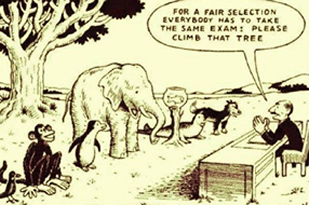
Assessment and evaluation is embedded in planning and instruction usually without being labeled. However, it is helpful when it is not only identified, but includes four general types. Details follow:
- Assessment and evaluation article: topics include:
- Why assess? What is assessment? Assessment related tasks, & Selecting & unpacking ideas for assessment,
- Quality Assessment Standards - checklist Determining outcomes
- What is authentic assessment?
- When do teachers assess students' attainment of outcomes?
- Four different times for assessment - diagnostic, formative, summative, and generative,
- Steps for creating criteria referenced, Assessment
- Procedure for Creating a Scoring Guide or Rubric,
- Norm-Referenced tests,
- Accommodation information
- Assorted assessment and evaluation links,
- Practice scenarios and role play for preprofessional and professional educators
- Procedures & guiding principles for assessment decision making to insure consistency, reliability, and validity
- Research, assessment measurements , normal curve, & related statistics
- Metacognition ideas for reflection and self-assessment suggestions or thinking starters to reflect on self-assessment
- Resources to support opt-out of standardized testing at United Opt Out National:
- How to File a Civil Rights Complaint
- Opt Out of Testing Letter Template
- Information on how resist corporate education reform
- Specific rubrics and scoring guides are located in subject or integrated plans
- Electronic formative assessment — Socrative: A Historical Perspective
- 2014 acquisition: MasteryConnect acquired Socrative, established in 2010, to complement standards-based mastery tracking with real-time classroom assessment.
- During instruction: Teachers can use quizzes, polls, and exit tickets to check student understanding and inform instructional decisions as learning occurs.
- 2018 acquisition: Socrative became part of Showbie's suite of classroom assessment, feedback, and workflow tools.
- Current resources: Showbie and Socrative.
- Historical references: 2014 acquisition and 2018 acquisition.
- Electronic assessment. Practice with electronic assessment formats may help learners become more familiar with them. Digital skills may influence performance even when they are not the intended learning outcome. Computer-based and paper-based versions of tests may require similar cognitive activity, but evidence is needed to establish validity, reliability, and comparability of results. Differences between formats, including screen fatigue and reading speed, may influence individual performance.
- Typing proficiency, screen size, familiarity with electronic media, and anxiety may affect performance relative to paper-based testing. Educators should provide opportunities to develop familiarity with assessment formats and appropriate accessibility features, alongside instruction in the content being assessed.
Educational Issues & Trends — Historical & Contemporary
Explore historical and contemporary educational issues, trends, and perspectives to better understand the influences on education and inform professional decision-making.
Historical Perspectives & Resources
- American Education - people & events that shaped American education
- Historical Political Events in Human Development - timeline
- Science, Mathematical, & Technological Events - timeline
- Children's literature - timeline
- History of children's literature - notes
Political ramblings - notes
Resources:
Legacy Piaget
These resources document influential historical contributions to constructivist learning theory. Educators can use developmental frameworks to guide observation and instruction without treating age-based stages as fixed limits on individual learners.
Piaget's Theory of Cognitive Development. editions 1-5 2003.
Classic book on cognitive & affective development. A must read for anyone serious in wanting to understand learning and how intelligence, logic, and thinking develops cognitively and affectively.
Piaget for the Classroom Teacher. 1973.
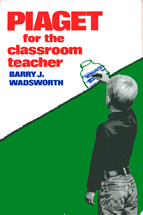
Includes examples of how to use Piaget's learning theory and ideas on cognitive & affective development in the classroom. Source for many of the tasks to explore student development of reasoning, conservation, & logic.
Children and Adolescents: Interpretive Essays on Jean Piaget. 1974.
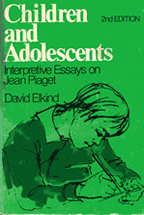
-----------------------------
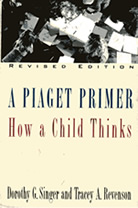
A Piaget Primer: How a Child Thinks. Revised edition. 1996.
Educational Policy & Practices
Standards
- The public's reasoning about standards is largely misunderstood because of a reasoning fallacy of generalizing that if something is good for an individual, it is good for everyone.
For example: High scores on tests grant entry to elite universities, therefore, high scores must be right for the nation as a whole.
Most parents would probably like their children to have high scores.
However, looking at our nation as a whole we should come to a different conclusion. In that situation we would want a combination of people that are able to be leaders, followers, heroes, creators, producers, so forth so that society could function for the benefit of everyone.
Pros & Cons for a National Curriculum & National or State Standards
Teacher Tenure & Due Process
Historical example (2010): The Shirley Sherrod case illustrates the importance of reviewing evidence in context and providing fair procedures. It is an analogy for teacher due process, not a case involving teacher tenure law. Tenure protections and procedures vary by jurisdiction.
- The ability to fire or ask for a person's resignation without due process is a perfect example for the granting of tenure to teachers.
When Shirley Sherrod was the Georgia State Director of Rural Development for the United States Department of Agriculture, her remarks were edited and used to force her to resign.
However, when a complete unedited video in full context was released, the NAACP, White House officials, and Tom Vilsack, the United States Secretary of Agriculture, apologized for the firing and Sherrod was offered a new position.
Explore the American Education Timeline for historical perspectives. Research legal cases related to teacher tenure, dismissal, and due process. Consider how these cases have influenced teachers’ professional rights and responsibilities.
SAT and College Admission
- How to get a perfect score by Allen Cheng (Historical resource: refers to the former 2400-point SAT scale. The SAT now uses a 400–1600 total score scale; consult current College Board guidance and individual college admission requirements.)
Mathematics Education
- More math, less "math war"
by Alan Schoenfeld and Phil Daro Science March 22, 2024. - Beyond the Math Wars: Focus on teachers to improve instruction. By Rachel S. McClam, Rebecca A. Cruz. Dec 2, 2024
Social Issues & Educational Opportunities
Housing & schools: The importance of engagement for educators & education advocates
- Sustainability & schooling - Suggestions for environmental and sustainable communities and education.
- Environmental education - This page asks six environmental education focus questions and provides information and resources to explore answers for them.
Education in Madrawar, Afghanistan — 2006
Late one February night, more than a dozen masked gun carrying Taliban burst into the 10-room girls' school in Nooria's village, Madrawar about 100 miles east of Kabul. They tied up and beat the night watchman, soaked the principal's office and the library with gasoline, set it on fire and escaped into the darkness.
The townspeople, who doused the blaze before it could spread, later found written messages from the gunmen promising to cut off the nose and ears of any teacher or student who dared to return.
The threats didn't work. Within days, most of the school's 650 pupils were back to their studies. Classes were held under a grove of trees in the courtyard for several weeks, despite the winter chill, until repairs inside the one-story structure were complete. Nearby schools replaced some of the library's books.
But the hate mail kept coming, with threats to shave the teacher's heads as well as mutilate their faces.
When, NEWSWEEK visited and talked to students and faculty on the last day of classes. Nooria, who dreams of becoming a teacher herself, expressed her determination to finish school.
"I'm not afraid of getting my nose and ears cut off," she said, all dressed up in a long purple dress and head scarf.
"I want to keep studying."
Newsweek June 26, 2006
Teaching — Challenges & Inspiration
Freedom Writers

... on the recommendation of my granddaughter, I saw Freedom Writers.
I was very glad I did. It is one of the best films I have seen. The film presents the struggles of teaching and the life of a teacher. The passion, desire, and commitment needed to determine and provide what students need for them to develop to the point of empowerment, as well as the persistence and determination to overcome barriers to provide it. While fear and hate are the major barriers depicted in this film, barriers of traditional schooling and public misconceptions of what it means to be educated and how to achieve it are just as great of barriers to be overcome for students to achieve a quality education. Find the time to see this film with a loved one. It has lifelong empowering possibilities.
The Freedom Writers movie trailer
Freedom Writers Foundation & resources ...
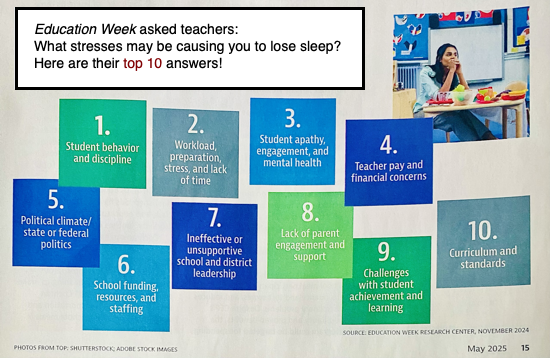
Teacher Concerns — A Historical Snapshot (2024)
Educational Quotations & Reflections
The plural of anecdote
is not data.
Albert Einstein said,
"It is a grave error to suppose that the joy of seeing and seeking can be furthered by compulsion or sense of duty."